

Winery real estate investment is emerging as one of the most structurally interesting asset classes in private real estate — and for good reason. Unlike single-use properties that rely on one revenue source, winery estates combine agriculture, hospitality, events, food and beverage, and tourism into a single operating platform with multiple simultaneous income streams. For accredited investors already familiar with real estate syndication, winery assets represent a category where operational complexity creates meaningful barriers to entry, forward-contracted event revenue provides cash flow visibility, and guest experience generates the kind of repeat engagement that conventional real estate rarely produces.
Investment opportunities in private real estate syndication are available only to accredited investors as defined by applicable securities laws.
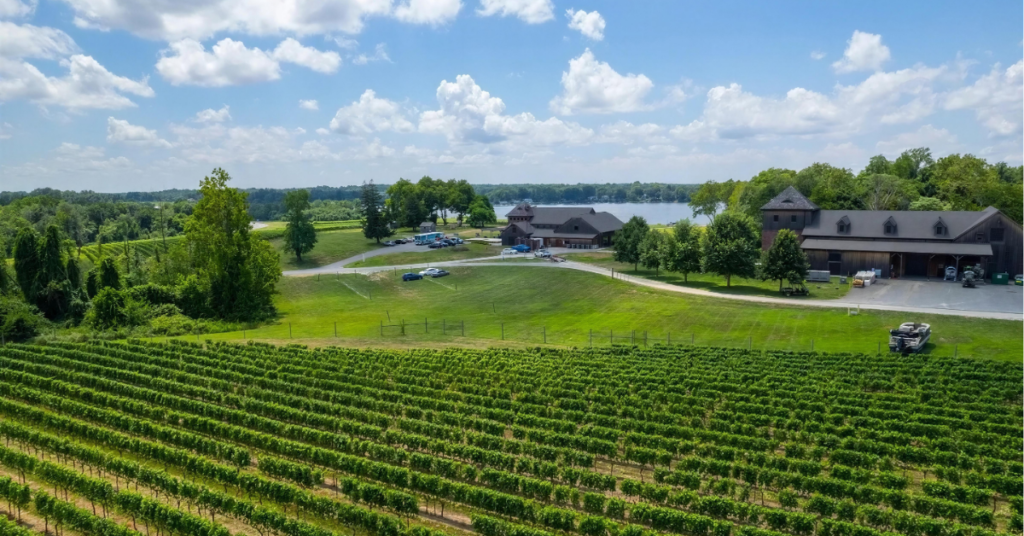
Bohemia Manor Farm, Chesapeake City, MD — a 438-acre waterfront vineyard estate. Owned by the funds offered by Accountable Equity and operated by VIVÂMEE Hospitality.
What Makes Winery Real Estate Different from Conventional Real Estate
Most real estate investment categories — multifamily, industrial, self-storage — generate revenue from a single core activity: tenants paying rent. The economics are straightforward, the underwriting templates are standardized, and the competition for quality assets is intense precisely because the operating model is replicable.
Winery real estate operates on a fundamentally different model. A well-positioned winery estate is not just a building collecting rent — it is an operating business generating revenue across multiple streams simultaneously. Those streams typically include vineyard and wine experiences, resort lodging, food and beverage operations, weddings and private events, golf, corporate retreats, and agri-tourism programming.
This diversity matters for investors because each revenue stream responds to different demand drivers. Event revenue is contracted months or even years in advance. Wine tourism is driven by regional travel patterns. Lodging revenue follows seasonal hospitality cycles. When one stream softens, others may hold or strengthen. That structural diversification within a single asset is difficult to replicate in conventional real estate categories.
The result is an investment profile that is less correlated to any single economic driver — and more dependent on the quality of the operating team managing it.
The Revenue Model Behind Winery Real Estate Investment
The investment case for winery real estate is built on revenue layering. Each layer serves a different market, operates on a different booking cycle, and responds to different economic conditions.
Contractual Event Revenue
The most structurally significant layer is contractual event revenue, primarily from weddings and corporate functions. Weddings at premium winery venues typically book 12 to 18 months in advance. That forward booking window creates revenue visibility that few real estate asset classes can match — the income is committed before the operating period even begins. A winery resort with the operational capacity and venue infrastructure to host multiple simultaneous events can generate substantial contracted revenue across a single weekend.
The key distinction: this revenue is contracted, not speculative. A bride does not cancel her wedding because of a stock market correction or a shift in consumer confidence. That structural resilience is one of the strongest arguments for winery real estate as an alternative to more economically sensitive asset classes.
Hospitality and Lodging
Winery resorts with on-site lodging capture additional revenue from guests who extend their event attendance into overnight stays, or who visit the property independently for wine tourism and leisure travel. This layer benefits from regional drive-to market demand — guests within a two-to-three-hour radius who are looking for weekend experiences without the cost and complexity of air travel.
Vineyard, Winemaking, and Wine Experiences
Vineyard operations and wine experiences add a revenue layer rooted in agriculture and agri-tourism. Wine tastings, vineyard tours, wine club memberships, and retail wine sales create recurring engagement that deepens guest loyalty and drives repeat visits. The agricultural character of the asset also contributes to its sense of place — the quality that differentiates a destination property from a commodity one.
Why Operational Complexity Creates a Barrier to Entry in Winery Real Estate
The same characteristics that make winery real estate interesting as an investment — multiple revenue streams, event logistics, hospitality staffing, agricultural operations, food and beverage management — also make it exceptionally difficult to operate.
This is not a weakness in the investment thesis. It is the investment thesis.
High operational complexity means fewer qualified operators, less competition for quality acquisition targets, and better entry pricing relative to comparable revenue potential. It is a barrier that keeps under-capitalized and under-experienced operators out of the market — which is precisely why the operators who can execute at this level may enjoy pricing advantages that more commoditized asset classes do not offer.
For experienced syndication investors evaluating a winery real estate opportunity, the critical question is not whether the property is attractive — it is whether the operator has the depth of experience to manage this level of complexity across every revenue stream simultaneously. Evaluating that operator capability requires understanding metrics that go beyond conventional hotel analysis. Traditional hotel metrics like ADR (Average Daily Rate) and RevPAR (Revenue Per Available Room) measure only the lodging component of a property’s income. For multi-stream winery resorts, these metrics dramatically understate the property’s full earning power. Total Revenue Per Available Room, or TRevPAR, captures all property revenue — lodging, events, food and beverage, wine experiences, golf, and ancillary income — divided by available rooms. TRevPAR provides a far more accurate picture of how a winery resort actually performs and is the preferred metric for evaluating destination hospitality assets with diversified revenue models.
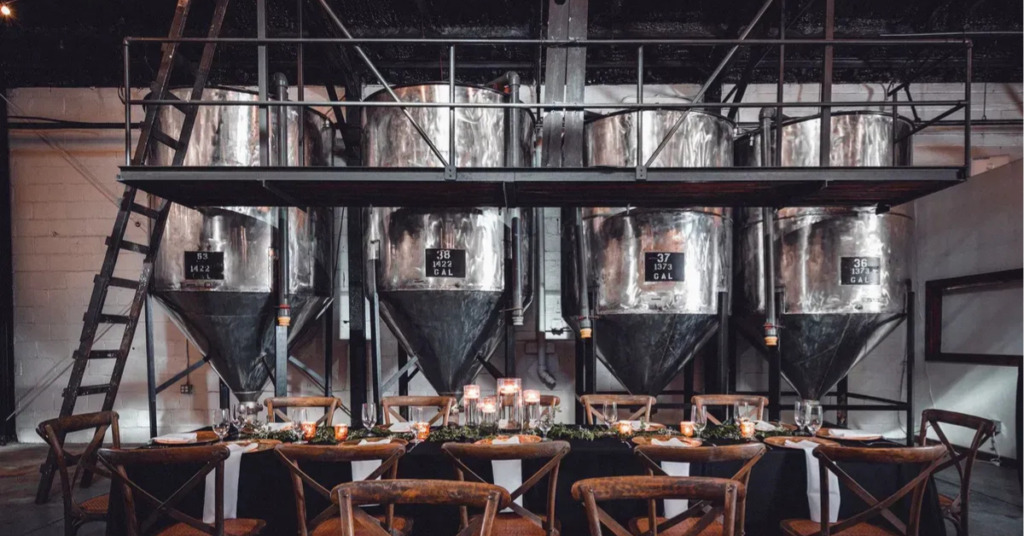
Winemaker Hall at Renault Winery Resort, Egg Harbor City, NJ — one of 19 unique event venues on property. Owned by the funds offered by Accountable Equity and operated by VIVÂMEE Hospitality.
How Winery Real Estate Fits in a Diversified Alternative Portfolio
For investors already allocated to private real estate through multifamily or commercial syndications, winery assets offer genuine diversification — not just a different property type, but a fundamentally different revenue structure with different demand drivers.
The diversification case rests on three structural characteristics. First, the forward-contracted event revenue model operates independently of broad hospitality market cycles. Second, the agricultural and wine tourism components draw from regional leisure demand rather than business travel or economic expansion. Third, the barrier to entry created by operational complexity limits new supply in a way that conventional asset classes — where any developer can replicate the product — cannot match.
For family offices and sophisticated investors building a portfolio of real assets, winery real estate represents a category where scarcity, operational depth, and experiential guest loyalty converge to create an investment profile that is structurally different from what conventional real estate categories deliver.
Investors evaluating opportunities in this space should prioritize operators with demonstrated hospitality expertise across multiple property types, vertically integrated management structures, and a track record of executing complex, multi-stream revenue models. Co-founders Josh McCallen and Melanie McCallen built both Accountable Equity and VIVÂMEE Hospitality on this foundation — Josh as CEO of both entities and Melanie as Chief Experience Officer of VIVÂMEE Hospitality — creating a vertically integrated platform where the same leadership team that raises capital also operates every property in the portfolio. That alignment between ownership and operations is a structural advantage that third-party management arrangements rarely replicate.
The assets owned by the funds offered by Accountable Equity and operated by VIVÂMEE Hospitality include properties across New Jersey, Maryland, and Colorado — spanning winery resorts, waterfront estates, golf courses, and a historic mountain lodge — with a portfolio of approximately 1,900 acres and 187 keys across seven properties.
Frequently Asked Questions About Winery Real Estate Investment
Is winery real estate considered a high-risk investment?
All real estate investments involve risk, including the potential loss of principal. Winery real estate carries additional operational complexity relative to more passive asset classes like multifamily or industrial. However, the multi-layered revenue model — particularly the forward-contracted event component — can provide structural downside protection that single-stream properties do not offer. Investors should conduct thorough due diligence on both the asset and the operating team before making any investment decision, and consult with qualified financial, legal, and tax professionals.
How do investors evaluate a winery real estate syndication opportunity?
The evaluation framework is similar to other syndication opportunities — sponsor track record, fee structure, business plan, and market fundamentals — but with an added emphasis on operational capability. Because winery real estate depends on active management across multiple revenue streams, the experience and vertical integration of the operating team becomes a primary differentiator. Investors should examine the operator’s history with comparable asset types, their staffing infrastructure, and their approach to event revenue management.
What is TRevPAR, and why does it matter for winery investments?
TRevPAR stands for Total Revenue Per Available Room. Unlike traditional hotel metrics like ADR (Average Daily Rate) or RevPAR (Revenue Per Available Room), TRevPAR captures all property revenue — lodging, events, food and beverage, wine experiences, golf, and ancillary income — divided by available rooms. For multi-stream properties like winery resorts, TRevPAR provides a far more accurate picture of the property’s full earning power than lodging-only metrics.
Winery real estate investment offers accredited investors an asset class that is structurally different from what most private real estate portfolios contain. The combination of agriculture, hospitality, and contracted event revenue creates a multi-layered income model with diversification benefits within a single property. For investors with the experience to evaluate operational complexity and the sophistication to look beyond conventional real estate metrics, winery assets represent one of the most genuinely differentiated categories in private real estate today. As with any investment, thorough due diligence — on both the asset and the operator managing it — is the essential first step.