

Experiential hospitality as an asset class is income-producing real estate resorts, vineyards, destination golf, and waterfront venues whose value is driven by the experiences it hosts rather than by leasable square footage alone. A growing number of accredited investors are looking beyond traditional real estate toward it because it offers something multifamily and industrial deals rarely do: a hard asset that is scarce, demand-diversified, and difficult to commoditize. Most private real estate still asks an investor to fall in love with a spreadsheet a rent roll and a five-year pro forma for a building they will never set foot in. This category puts a real, visitable place at the center instead. The thesis behind Accountable Equity’s portfolio fits in a single line: own the experience — invest where you’d want to vacation. This article explains what the category is, why investor attention is shifting toward it, and what makes it structurally different from the holdings most portfolios already contain.
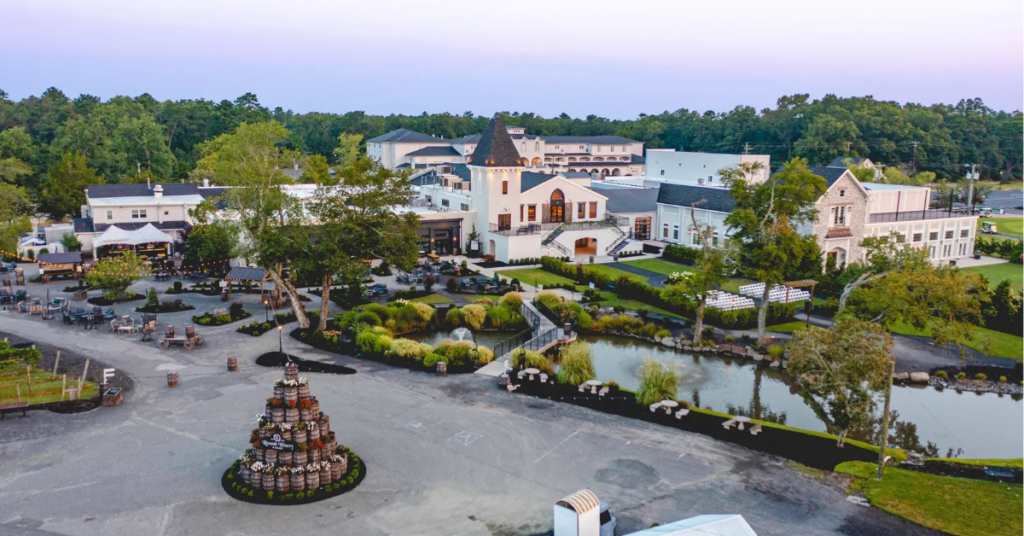
Renault Winery Resort (est. 1864), Egg Harbor City, NJ — owned by the funds offered by Accountable Equity and operated by VIVÂMEE Hospitality.
Accountable Equity offers investment opportunities exclusively to verified accredited investors under Rule 506(c) of Regulation D. All investors must meet applicable qualification requirements as defined by the SEC. For a detailed overview of who qualifies, visit our accredited investor resource page.
In This Article
- What is experiential hospitality as an asset class?
- Why accredited investors are looking beyond traditional real estate
- What makes experiential hospitality different from conventional real estate
- Why operations are the asset, not just the building
- Why experiential hospitality is reaching investors now
- Frequently Asked Questions
What is experiential hospitality as an asset class?
Experiential hospitality real estate is a class of income-producing property whose value is driven primarily by the experiences it hosts rather than by leasable space alone. The category covers destination resorts, vineyards, golf properties, and waterfront venues — places people travel to on purpose, stay at, celebrate at, and return to.
The distinction matters. Most institutional real estate is a “buy the box, collect the rent” proposition: the building creates value by housing a tenant, and the operator’s job is largely to keep it occupied and maintained. Experiential hospitality inverts that. The property earns by programming — the weddings, retreats, rounds of golf, tastings, and overnight stays it can host — and the quality of that programming shapes the return directly.
A useful qualifier is “drive-to.” Drive-to destination resorts sit within a few hours of major population centers, so demand does not depend on airfare or a full flight calendar. A family across the Northeast corridor or along the Colorado Front Range can decide on a Thursday to spend the weekend at the property. That proximity makes demand more durable and less exposed to the swings that hit fly-to leisure markets first. Set against the categories most accredited investors already hold — multifamily, industrial, self-storage — the difference is scarcity. Those are, by design, commodities. An experiential resort is the opposite: specific, brandable, and difficult to replicate.
Why accredited investors are looking beyond traditional real estate
The shift in attention is less about chasing novelty and more about correcting an imbalance. Many accredited investors are heavily concentrated in public equities and in a narrow band of private real estate — multifamily, industrial, storage — that has come to behave a lot like the public markets it was meant to diversify away from. Three pressures are widening the search.
The first is diversification fatigue. When a large share of a portfolio sits in correlated holdings, adding the next multifamily syndication does not meaningfully change the risk picture; it concentrates it. Investors who already own a dozen “boxes” are looking for an asset that does not move in lockstep with the rest of the book.
The second is margin compression. Years of abundant capital flowing into the same commodity categories pushed valuations up and forward return expectations down. The “another multifamily deal” problem is real: a flood of undifferentiated sponsors offering broadly similar product makes it hard to find an edge — and hard to tell one operator from the next.
The third is the appetite for a hard asset with a story and a use. This is where the two core investor profiles converge. The experientially minded investor — often a business owner or professional who already values travel and hospitality — responds to owning a piece of somewhere they would genuinely want to visit. The diversification-focused investor is drawn to a return stream that is operator-driven and demand-diversified rather than rate-sensitive and correlated. Different motivations, same destination.
What makes experiential hospitality different from conventional real estate
The defining feature of the category is a moat that commodity real estate does not have: the irreplaceability of the place itself. You cannot manufacture a heritage vineyard, relocate a historic lodge to the gateway of a national park, or conjure a stretch of Chesapeake waterfront the way a developer adds another apartment building to a suburban corridor. Scarcity and irreplaceability are built into the asset, and they tend to compound over time rather than erode.
Accountable Equity’s portfolio illustrates the point. It spans seven experiential resort properties across the Northeast corridor and the Colorado Front Range, anchored by Renault Winery Resort in Egg Harbor City, New Jersey — a working vineyard established in 1864. The portfolio also includes LBI National Golf & Resort in New Jersey; Kent Island Resort and Bohemia Manor Farm on the Maryland Chesapeake; Queenstown Harbor Golf Resort and The Golf Club at South River, also in Maryland; and the Historic Crags Lodge in Estes Park, Colorado, at the doorstep of Rocky Mountain National Park. Each is a destination with its own identity and its own draw — and none could be reproduced by a competitor with capital and a construction timeline. In this category, the place is both the marketing and the moat.
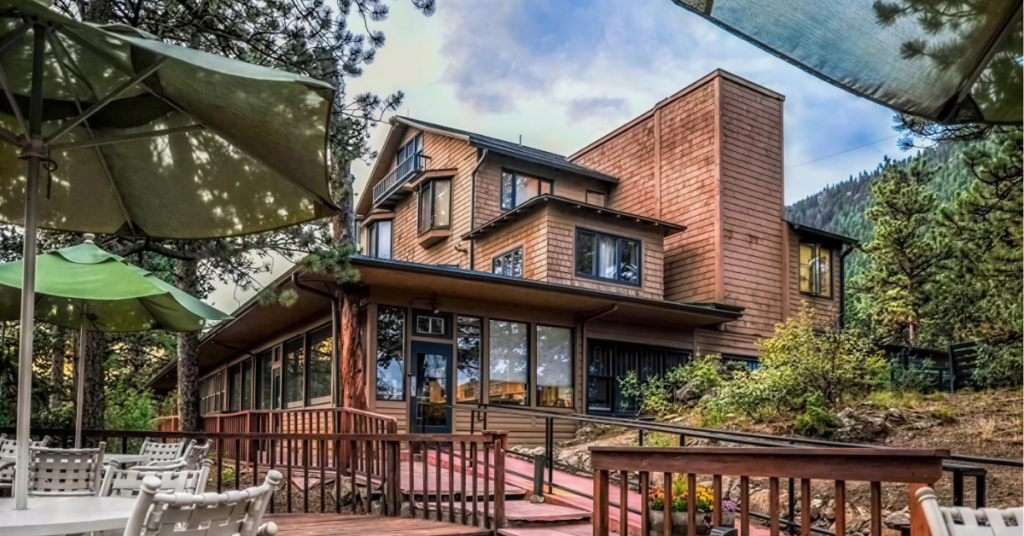
Historic Crags Lodge, Estes Park, CO — owned by the funds offered by Accountable Equity and operated by VIVÂMEE Hospitality.
The demand engine: many reasons to visit, many ways to earn
A second structural advantage is the diversity of demand. A conventional hotel rises or falls largely on one variable — room nights. An experiential resort earns from many independent streams: weddings and social events, corporate retreats, golf and membership, culinary and wine tourism, leisure stays, and increasingly wellness and group programming. These streams do not all move on the same cycle. Couples book weddings twelve to eighteen months out, on a calendar that has little to do with this quarter’s travel sentiment; corporate retreats follow company budgets; golf generates recurring local engagement. When one source softens, others can carry the property — a resilience a single-use building cannot match.
This is where Accountable Equity’s operating philosophy of “lead with contracts” comes in. Rather than building a property and hoping leisure traffic arrives, the model emphasizes a forward-contracted event pipeline — weddings, retreats, and festivals booked, and revenue substantially committed, before the season begins. Demand you can see on a calendar is demand you can underwrite, and that forward visibility is one of the most meaningful ways the category de-risks itself relative to a conventional, spot-demand hospitality bet.
Why operations are the asset, not just the building
In commodity real estate, you underwrite a building. In experiential hospitality, you underwrite an operator. The reason is mechanical: service quality is not a soft amenity here — it is the engine of value. A genuinely excellent guest experience drives reviews; strong reviews drive bookings and rebookings; a full, well-run calendar drives revenue; and durable revenue is what ultimately drives the value of the asset. A beautiful property run indifferently underperforms an equally beautiful property run with discipline and care.
Accountable Equity frames this as “Four-Star Strategy, Five-Star Experience” — the conviction that institutional-grade operational discipline and authentic, human hospitality have to be paired. Most operators manage one or the other. The thesis is that the combination is what compounds: warmth guests can actually feel, delivered on top of operational rigor, produces the repeatable experience that underwrites the investment case.
Who owns, who operates, who raises
It is worth being precise about how the pieces fit together, because the structure is itself part of the thesis. The investment funds own the assets. VIVÂMEE Hospitality, the affiliated operating platform, runs them. Accountable Equity raises the capital. Each entity does the job it is built to do, and the operating company is in-house rather than hired out. That vertical integration is co-founded and led by Josh and Melanie McCallen, who built both the capital side and the hospitality side together. Both Accountable Equity and VIVÂMEE Hospitality were named 2025 Inc. 5000 honorees — recognition earned in the same year across the investment firm and the operating company alike. For an accredited investor, the practical takeaway is alignment: the team underwriting the deal and the team responsible for the five-star experience are the same platform, accountable for the full arc from acquisition to guest to return.
Why experiential hospitality is reaching investors now
Experiential hospitality is not new. What is new is its maturation into something institutional capital can take seriously. For a long time, destination resorts were a fragmented, owner-operator cottage business — passion projects run on instinct, hard for outside investors to evaluate or scale. What has changed is the application of institutional discipline to a category previously run on feel: forward-contracted revenue models, professional operating standards, and platforms structured to acquire and steward multiple properties rather than nurse a single one.
None of that is a market-timing call, and nothing here should be read as one. The point is narrower: the conversation about experiential hospitality as a legitimate, allocatable category is happening now because the category has matured to where it can credibly sit in an accredited investor’s portfolio alongside holdings they already understand. Whether and how it fits any individual portfolio is a question for that investor and their own advisors.
Frequently Asked Questions
What is experiential hospitality as an asset class?
It is income-producing real estate — resorts, vineyards, destination golf, and waterfront venues — whose value comes from the experiences it hosts rather than from leasable square footage alone. Returns are driven by guest demand and event programming, and by the quality of the operator running the property, rather than by a single long-term tenant.
How is it different from investing in a hotel or multifamily property?
A hotel or apartment building is largely a commodity that competes on price and occupancy in a crowded market. An experiential resort is scarce and difficult to replicate, and it earns from many independent demand streams — weddings, retreats, golf, wine and culinary tourism, leisure — rather than one. That diversity of demand is intended to make revenue more resilient across cycles.
Who can invest in experiential hospitality real estate syndications?
Accountable Equity’s opportunities are offered exclusively to verified accredited investors under Rule 506(c) of Regulation D. Eligibility is based on SEC accreditation standards, and any offering is made only through definitive offering documentation. Materials like this article are educational and are not an offer to sell securities.
Why are accredited investors interested in this category now?
Many are over-allocated to public markets and to commodity real estate that has grown correlated and competitive. Experiential hospitality offers a hard asset with diversified demand and operator-driven returns — and the category has matured enough operationally that institutional-minded investors can now evaluate it on credible terms.
A category worth understanding first
Experiential hospitality as an asset class is built on three ideas: the place is scarce and hard to replicate, demand comes from many directions rather than one, and the operator — not just the building — is the asset. Together they describe a category that behaves differently from the multifamily and industrial deals that fill most private portfolios. It is a thesis worth understanding well before it is ever a decision worth making.
If you’d like to follow the thinking as it develops, join the Accountable Equity community and newsletter for the full library of investor-education content, property spotlights from across the portfolio, and a first look at how the experiential thesis plays out on the ground. For the practical mechanics, see our companion guides How to Invest in Experiential Resort Real Estate [Post #49 — link on publish] and The Accredited Investor’s Path: How to Go From Curious to Committed in Resort Syndications [Post #50 — link on publish].
UP NEXT IN THIS SERIES
Next: How to Invest in Experiential Resort Real Estate: A Step-by-Step Guide for Accredited Investors